Matthew reflects on the true cost of leaving the tax booth and discovers that money was only the most visible part of what he surrendered. Following Jesus separated him from the community of fellow tax collectors and outsiders who had become his social world, and it stripped away the small but significant power he had exercised through Rome’s authority. Most profoundly, Matthew had to surrender an identity constructed around wealth, control, and the ability to assign value to everything around him. The real price of following Jesus was therefore not merely his livelihood. It was the self he had built around it.
What Matthew received, however, proved far greater than what he surrendered. First came forgiveness—not as an abstract doctrine but as the experience of being fully known and nevertheless invited. His past was neither denied nor allowed to become the final definition of his life. He also received a new community, one held together not by shared exclusion but by a shared encounter with Christ. Finally, Matthew discovered that Jesus had not discarded the abilities he had developed in his former life. His disciplined mind, attention to detail, capacity for organization, and instinct for recording could be redirected toward testimony. The accountant remained, but the purpose of his accounting changed.
Looking back, Matthew concludes that the cost of discipleship is different for every person because Jesus confronts whatever occupies the center of that person’s life. The call is not merely to surrender possessions or habits but to relinquish the thing around which identity itself has been organized. Yet Christ does not leave an emptiness there. Matthew’s own life becomes evidence of what redemption can do: the tax collector who once recorded what people owed becomes a witness to what God gives. The man whose former life might have seemed to disqualify him discovers that it has uniquely prepared him to proclaim a gospel in which neither righteousness nor failure determines who receives the invitation. The price was the person Matthew had made himself. The gift was the person grace enabled him to become.

The Bible does not use the exact phrase Christian walk at all; however, the New Testament does explain to Christians how to “walk” in...
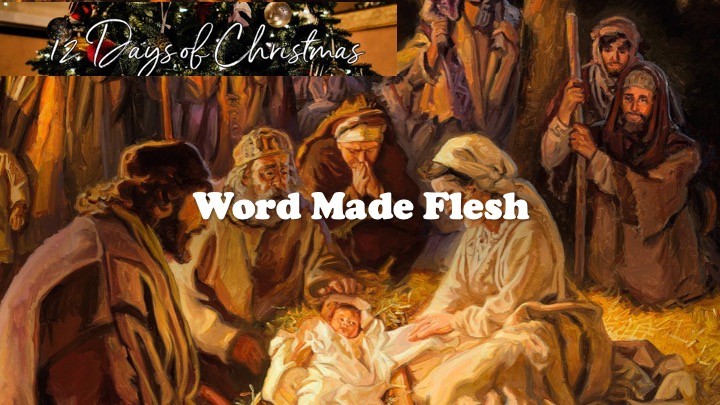
In John 1:1-2, we read that “in the beginning was the Word, and the Word was with God, and the Word was God. He...

After spending some time exploring the importance of making 2021 a year of spiritual growth, we begin to explore some specific spiritual goals we...