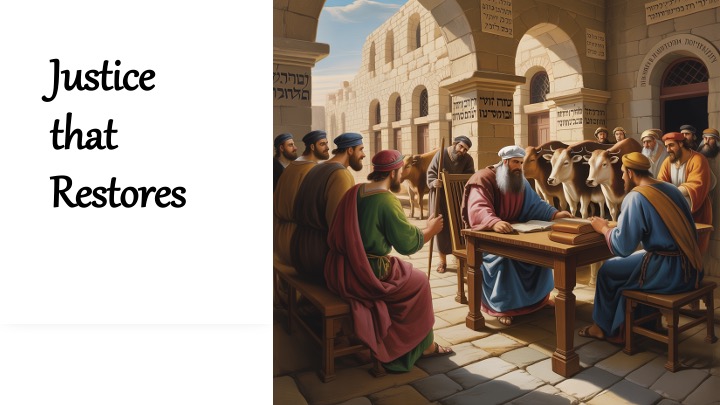
The Old Testament presents a revolutionary vision of justice that shifts the focus from retributive punishment to restitutive restoration. As outlined in Exodus 22, the law regarding theft does not prioritize state-administered fines or imprisonment, but rather the direct repair of the harm caused to the victim. By requiring a thief to repay multiple times the value of what was stolen—such as five oxen for one—the law ensures that the victim is not only made whole but is compensated for their suffering and loss of use. This approach asks "What does the victim need to recover?" rather than simply "What does the offender deserve?", treating justice as the active healing of a community breach.
This system of restitution is inherently more demanding than modern incarceration because it forces the offender to take concrete responsibility for their actions. If a thief lacks the means to pay, the law requires them to work until the debt is satisfied, ensuring that the offender personally experiences the cost of their crime. This process serves a dual purpose: it prioritizes the dignity and restoration of the victim, who would otherwise bear the cost of the crime alone, and it provides a transformative lesson for the thief. Restitution transforms the offender from a passive recipient of punishment into an active participant in repairing the social fabric they unraveled.
Ultimately, focusing on restoration rather than mere punishment honors the theological truth that all resources are entrusted by God and that theft is a violation of that sacred trust. By involving the community in the process of witnessing and enforcing these repayments, the law maintains accountability while simultaneously opening a path for genuine forgiveness. Once the debt is paid and the victim is restored, the "sure reward" of righteousness becomes possible, allowing the broken bonds of trust to be mended. In this way, the Eighth Commandment acts as a safeguard for a community where justice is measured by the presence of peace and the wholeness of its members.

Thomas recalls the final evening he spent with Jesus before the crucifixion, when Jesus told the disciples that He was going away to prepare...

What’s in a name? Proverbs 22:1, “A good name is to be chosen rather than great riches, and favor is better than silver or...

The Old Testament sets the stage for Jesus by presenting Him through prophetic titles and metaphors that deepen our understanding of His mission. Titles...