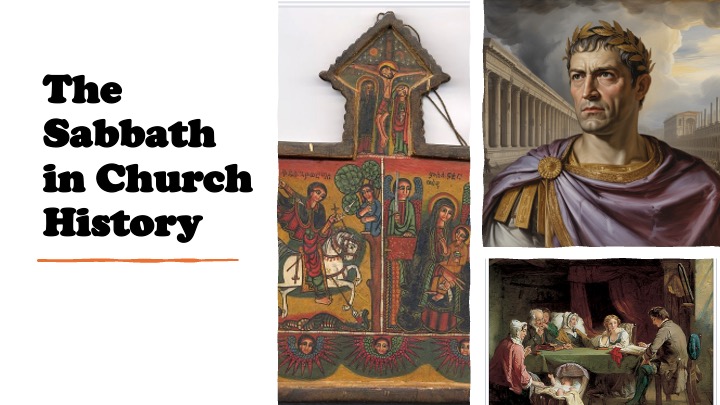
The historical transition from the seventh-day Sabbath to Sunday worship was not a sudden theological shift by the apostles, but a gradual “drift” driven by cultural and political forces. Scripturally, the apostles—including Paul—continued to observe the Sabbath as their “custom,” and there is no record of the massive scandal that would have inevitably followed a formal abolition of one of the Ten Commandments. For centuries, Sabbath rest and Sunday resurrection celebrations coexisted. However, as the church became increasingly Gentile, the Sabbath was marginalized as “Jewish,” while Sunday gained prominence due to its cultural resonance in the Roman world and Constantine’s fourth-century political decree establishing it as a state day of rest.
This shift resulted in a profound loss of spiritual and creational connection. By abandoning the seventh day, the church lost its explicit link to the “rest of God” established at the beginning of the world, effectively diminishing the sense that rhythm is woven into the fabric of reality. The Sabbath functioned as a countercultural witness and an embodied practice of trust; it was a weekly “test” asking believers if they could stop their labor and trust God for provision. When this practice faded into mere convenience, the church lost its prophetic edge against the world's relentless demands for productivity, eventually justifying this “forgetting” as theological progress or a rejection of “legalism.”
Reclaiming the Sabbath today is an act of resistance against the narrative that sacred time is disposable or interchangeable. God’s command to “Remember” anticipated our tendency to prioritize convenience over covenant, and the recovery of this practice offers a return to a primal, restorative rhythm. It is an invitation to move beyond treating all time as a monetized commodity and to once again honor the signature of the Creator. By choosing to remember what was lost, we realign ourselves with the practice of the apostles and the design of creation, bearing witness that our worth is not measured by our output but by our belonging to the God who reigns over both work and rest.
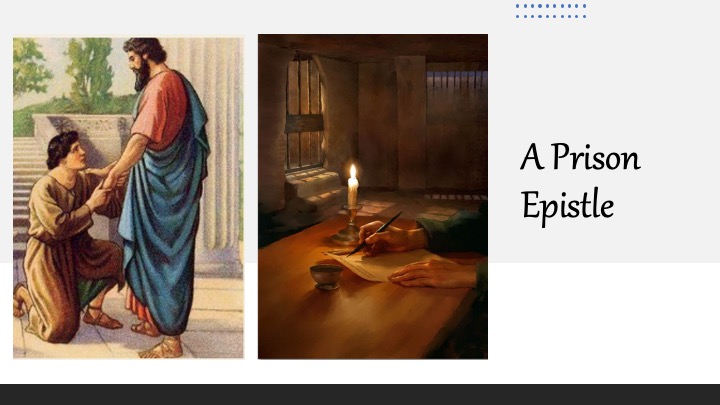
Philemon was a first-century Christian and a slave owner who also hosted a church in his home, most likely in Colossae. The apostle Paul...

Demons and demonic activity have become cool. But Jesus didn’t think so. As we find in the Gospels, Jesus spent a good amount of...

The Jesus Movement was a counterculture Christian youth revolution that emerged in the United States during the late 1960s and early 1970s. This change...