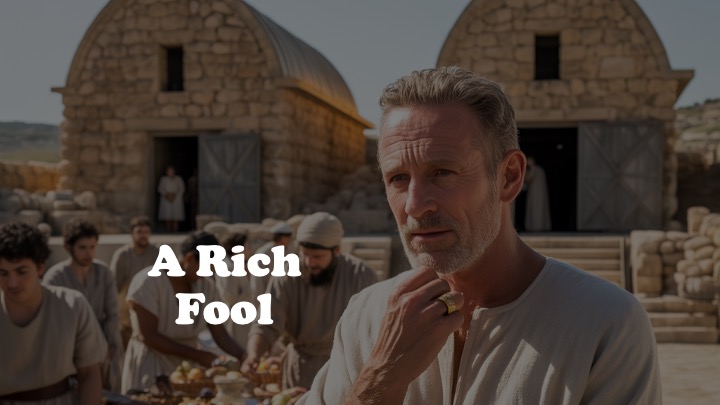
The Parable of the Rich Fool (Luke 12:16-21) is a jarring teaching that confronts the universal human temptation toward idolatry, self-sufficiency, and the delusion of permanence. The parable is prompted by a real-life dispute over inheritance, setting the stage for Jesus' warning: "Watch out! Be on your guard against all kinds of greed; life does not consist in an abundance of possessions." The rich man, blessed with an abundant harvest, responds not with gratitude or generosity, but with anxious, self-centered monologue, repeatedly using "I" and "my" to strategize the building of bigger barns. His fatal error was not his wealth, but his assumption of unlimited time and his belief that accumulated surplus could secure his soul, allowing him to simply "eat, drink and be merry," without acknowledging God or eternity.
The parable's profound truth is delivered in God’s stark pronouncement: "You fool! This very night your life will be demanded from you." This sentence instantly dismantles the man's illusion of control, revealing that time and his very soul were merely on loan. Jesus' core teaching is that earthly success is no guarantee of spiritual security, and the things we hoard—whether literal grain, money, or self-sufficiency—are ultimately empty. The man leaves behind barns full of grain, representing a life full of temporal harvest but devoid of eternal legacy, faith, or worship. This forces the listener to examine their own "barns"—the places where they store identity, pride, and security—and realize that all will fail on the day accountability is required.
Ultimately, this story is a critical call to strategic, eternal stewardship and humble dependence. Jesus reframes the meaning of life, urging His followers to cease "hoarding possessions for himself" and start being "rich toward God." This means consciously prioritizing eternal investment over temporal gain: living with radical urgency, practicing generous giving, surrendering control, and using temporary resources (time, talent, and wealth) to serve others and advance the Kingdom. Jesus is not condemning planning; He is condemning the idolatry of control, revealing that His ministry is about transforming the heart's posture so that peace is found not in a full bank account, but in complete, trusting obedience to the Giver.
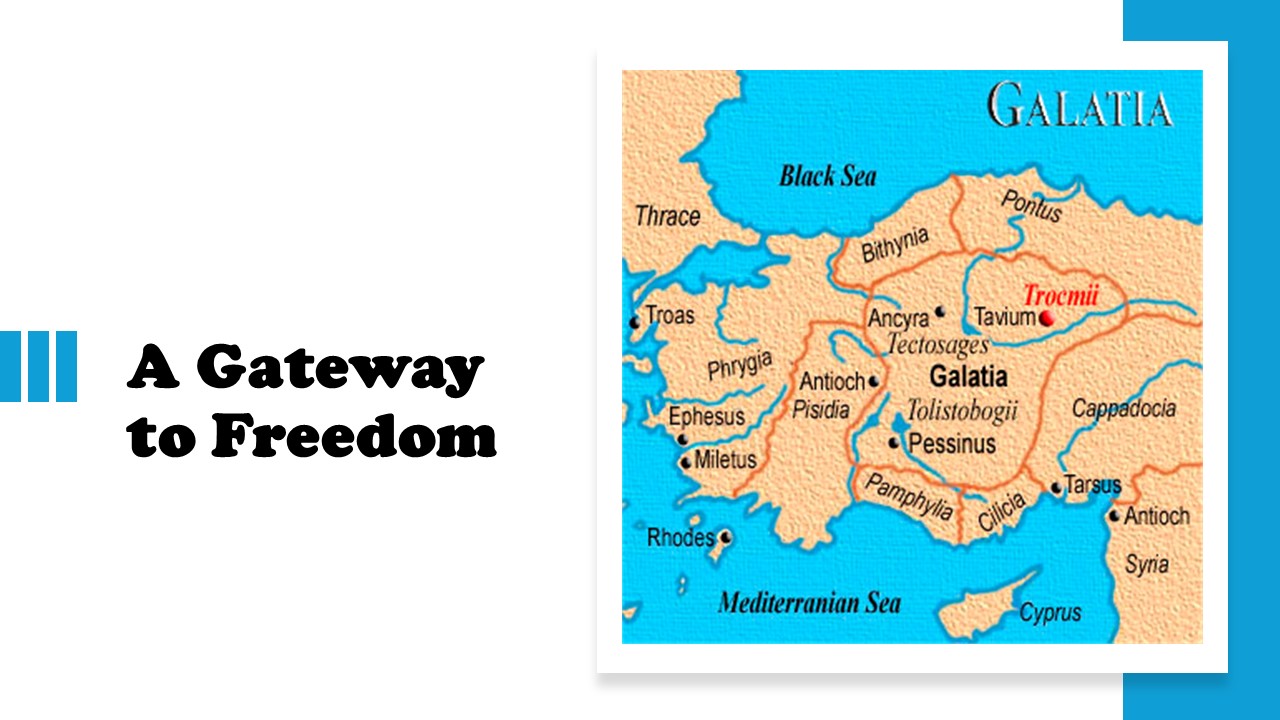
Galatia, situated in the central part of Anatolia in Asia Minor, is a region with a rich history and significant geographical importance. Originally settled...
In today’s episode, we explore the life and leadership of Joshua, a key figure in the Bible. Joshua was born during Israel's slavery in...
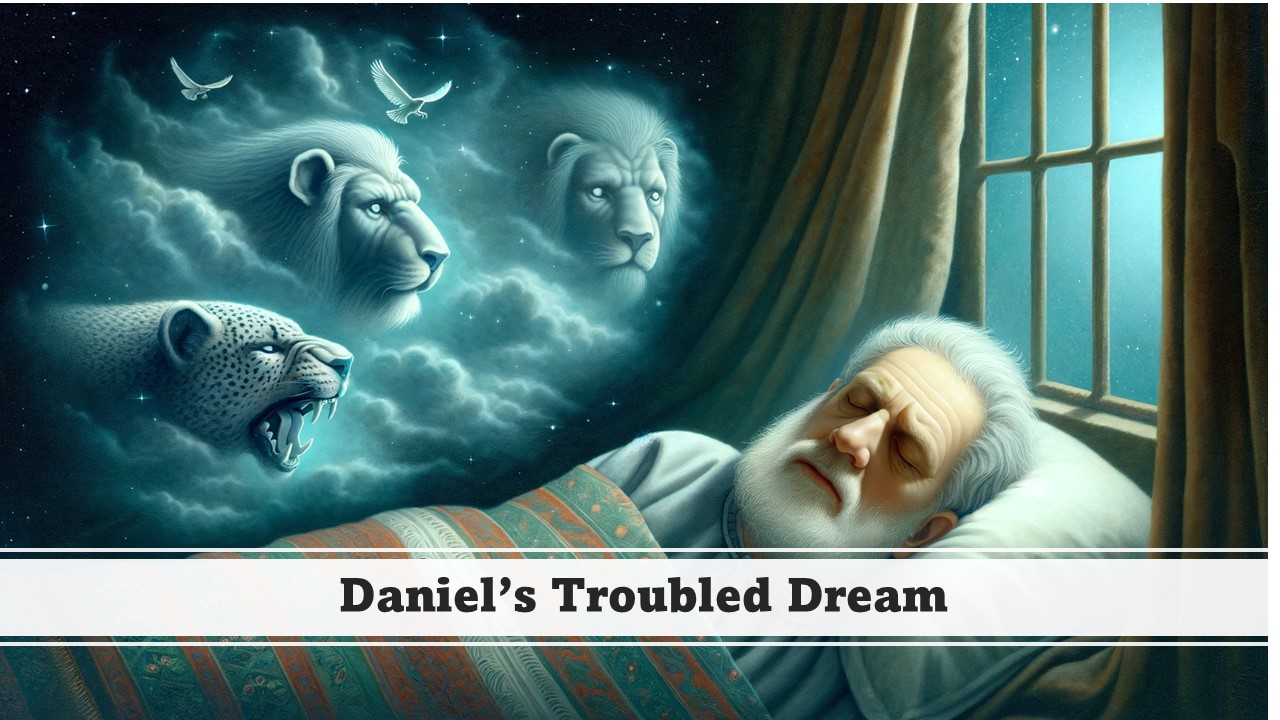
In Daniel's prophetic dream, detailed in Daniel 7, he observes a tumultuous sea from which four distinct beasts emerge, each symbolizing a successive kingdom....