In Philippians 4, the apostle Paul reveals that contentment is not an innate trait or a natural response to having enough, but a discipline and a practice that must be learned. Because our default human state leans toward comparison and coveting, achieving contentment requires intentional effort and training to focus on what is present rather than what is lacking. Paul acknowledges the inherent difficulty of this pursuit, explicitly stating that true contentment goes against natural tendencies and is only possible through the strength provided by Christ.
A primary discipline used to cultivate this mindset is gratitude, which shifts an individual's focus from longing to appreciation. While modern research confirms that practicing gratitude significantly increases life satisfaction and lowers anxiety, historical examples also illustrate its transformative power. For instance, despite accumulating immense wealth, industrialist John D. Rockefeller was deeply miserable and plagued by chronic stress until a later spiritual awakening led him to practice gratitude and generosity. His life underscores that accumulating more possessions fails to produce contentment, whereas actively giving thanks and sharing wealth can generate true happiness.
Beyond gratitude, contentment is developed through the disciplines of simplicity and trust. Choosing a simpler life frees individuals from the endless cycle of wanting more and the pressure of constant upgrades, a reality well understood by the early Desert Fathers and Mothers who found profound peace by owning almost nothing. Furthermore, contentment requires trusting in God's promise to provide for our basic needs and accepting life limitations that are beyond our control. Rather than a form of passive resignation, practicing daily gratitude, simplification, and trust serves as an active skill that ultimately frees people from the exhausting cycle of constant desire.
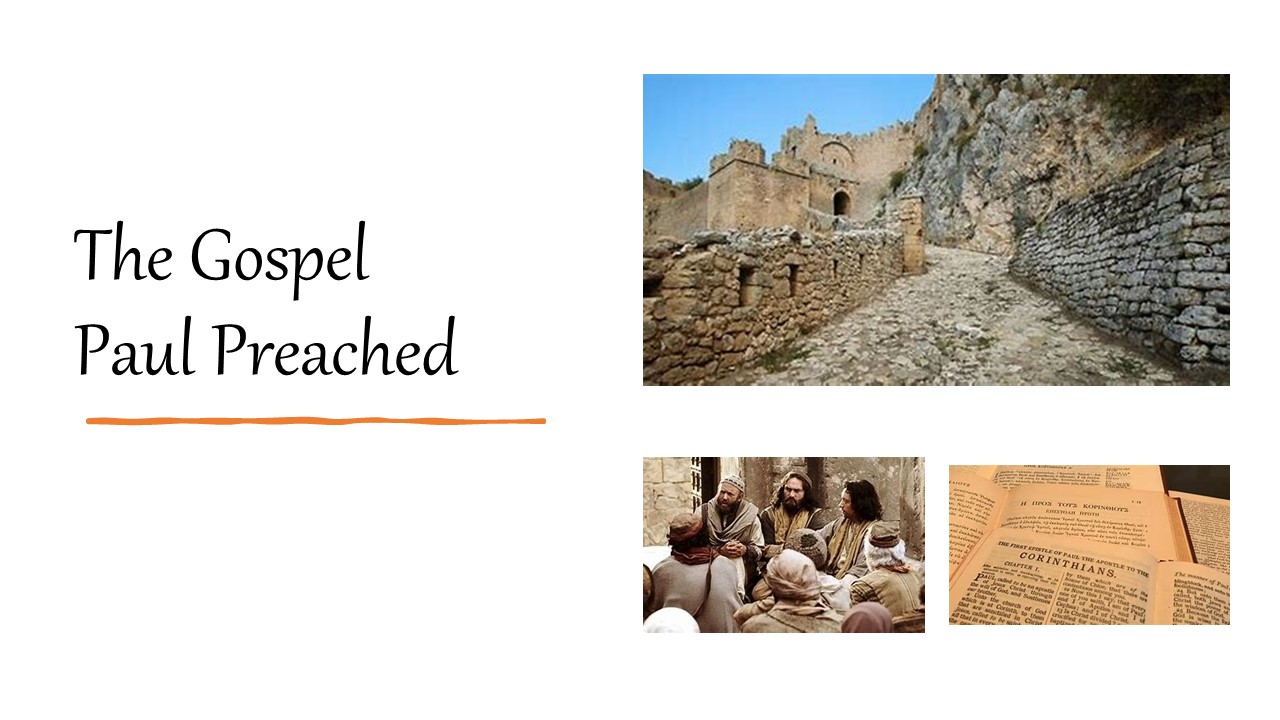
We wrap up the book of 1 Corinthians by exploring the context in which it is written and its importance in understanding early Christianity....

Daniel 8 recounts another prophetic vision received by Daniel, set in the third year of King Belshazzar's reign. In this vision, Daniel finds himself...
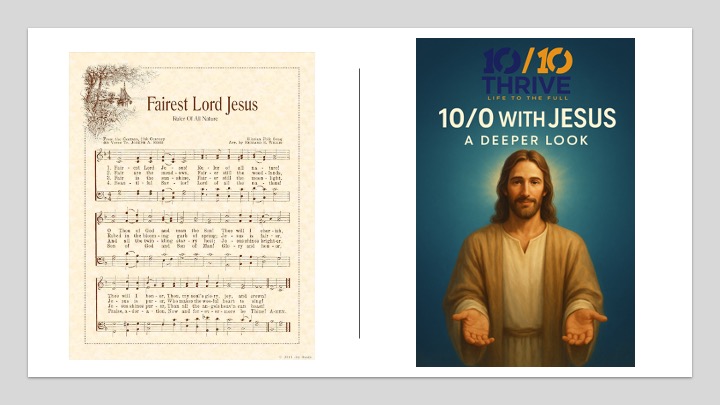
In this episode of 10:10 Thrive, we explore the beloved hymn “Fairest Lord Jesus” to deepen our understanding of Jesus’ character, ministry, and purpose...