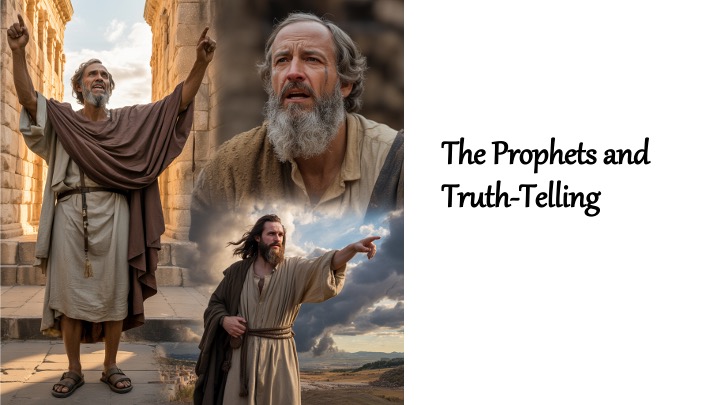
The prophets of Israel describe a culture where deceit is no longer a minor vice but a normalized, systemic crisis that penetrates even the religious leadership. Jeremiah warns that when prophets and priests practice deceit and lose the ability to feel shame for their conduct, the culture becomes fundamentally unstable and destined to collapse. This deception is portrayed as a poisonous, self-spawning evil that makes justice impossible, as truth-telling and sound judgment are inseparable foundations for a functional society.
The prophets emphasize that a society built on lies leads to total cultural breakdown: no one can trust their neighbors, justice systems fail when testimony is unreliable, and communities fragment into contradictory versions of reality. In contrast, truth-telling is presented as an essential expression of covenant faithfulness and a reflection of God’s own truthful character. God's hatred for lies and false oaths is central to His nature, and He demands that His people reflect this by speaking truth to one another to maintain the bonds of their community.
Restoration of a broken culture is only possible through a collective return to truthfulness and sound judgment. The prophets call for people to become prophetic voices by correcting misinformation and insisting on honesty, even when it creates friction. Ultimately, the Ninth Commandment is a call to recognize our responsibility for the culture we create through our speech, moving beyond the mere avoidance of lying to becoming people deeply committed to truth as the only foundation upon which a community can flourish.
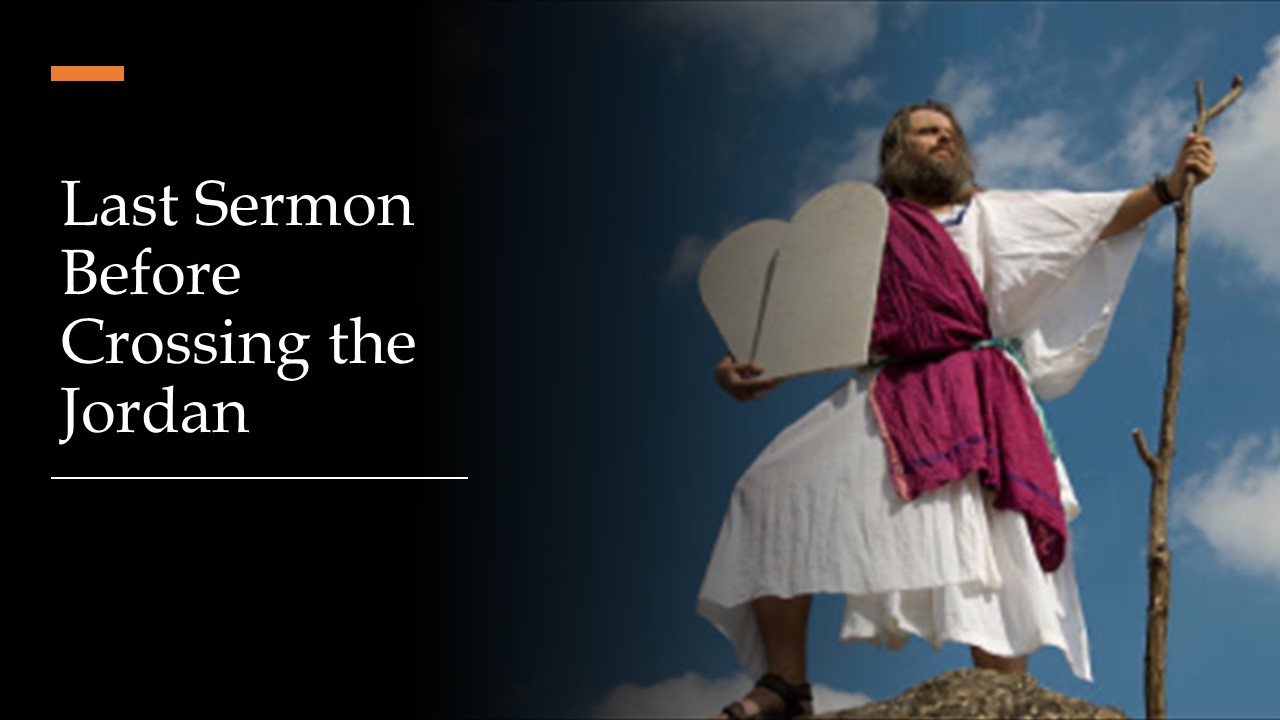
Moses’ life is ending. Forty years of experience has convinced him that without strong leadership, the people he has encouraged in the way of...

The Book of Ruth not only tells a beautiful love story but also highlights the themes of loyalty, faithfulness, and the providence of God....
What are some verses in the Book of 1 John on which we ought to meditate? Scriptures referenced include more than 22 passages from...