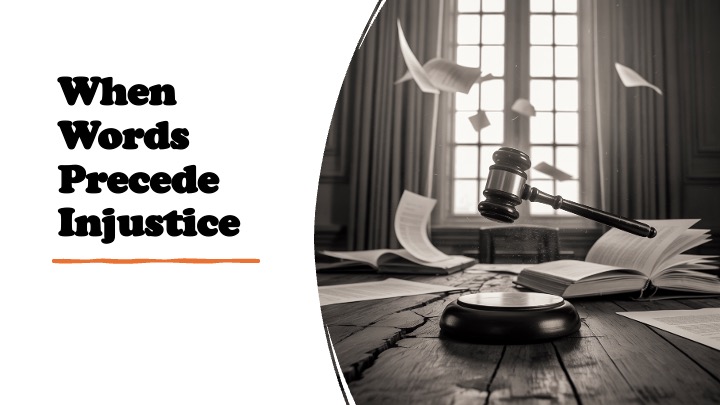
The Ninth Commandment against bearing false witness is a vital safeguard against injustice, as false words often serve as weapons that enable the powerful to exploit the vulnerable. This pattern is vividly illustrated in the story of Naboth, whose vineyard was stolen by King Ahab after Queen Jezebel orchestrated a scheme involving false testimony. By seating "scoundrels" to lie and claim Naboth had cursed God and the king, Jezebel used perverted justice to facilitate an innocent man's execution and the seizure of his property.
A similar dynamic appears in the story of Joseph, whose brothers used false witness to cover up the crime of selling him into slavery. By presenting their father with Joseph's robe dipped in goat's blood, they created false evidence that led Jacob to believe a ferocious animal had killed his son. In both biblical accounts, false charges were spoken, believed by those in authority, and acted upon, resulting in severe harm to the innocent and the temporary triumph of injustice.
Ultimately, these narratives demonstrate that false witness is a dishonest use of power that destroys lives and corrodes the systems meant to protect people. While these lies may initially succeed, they carry long-term consequences: Ahab faced divine judgment, and Joseph’s brothers were haunted by their guilt for years. Because God sees the destruction false words cause, the Ninth Commandment demands that individuals use the power of speech to protect the innocent and uphold the integrity of testimony rather than to harm the defenseless.
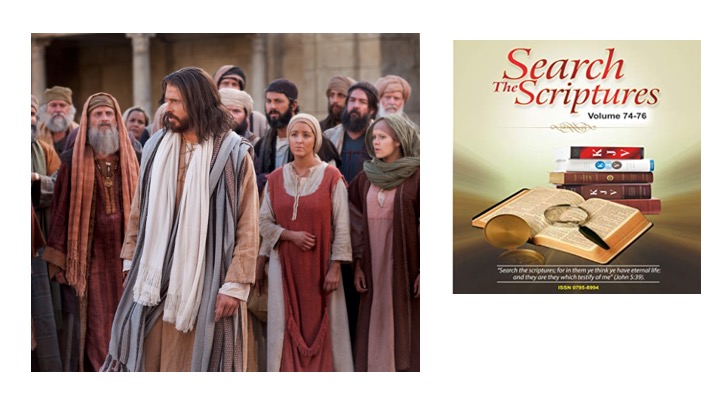
Over time certain books, that were never part of the Hebrew canon, began to be quoted as authoritative by some early Christians. For a...

The Ten Commandments reveal God's design for human flourishing. When God occupies the center of our lives, we learn to worship Him as He...
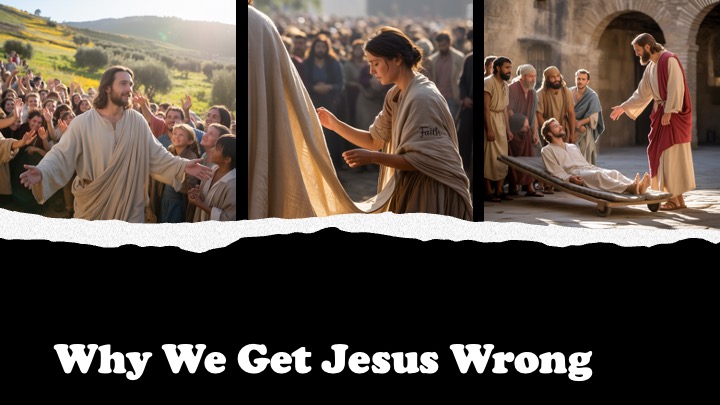
In this episode, we explore the historical and cultural reasons why a significant gap exists between what Jesus taught and what many of his...