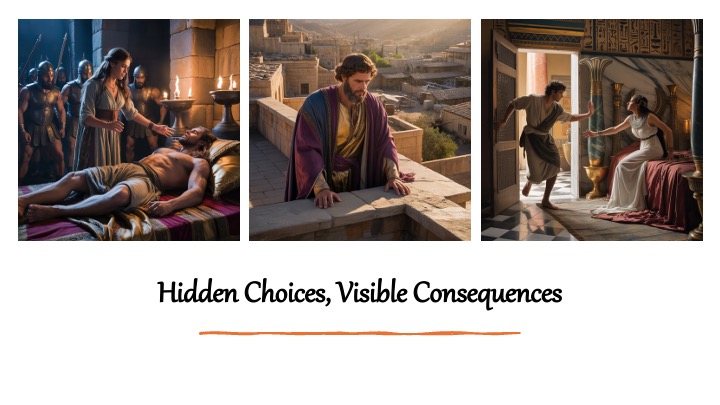
The contrasting Old Testament narratives of Joseph, David, and Samson reveal a fundamental truth about the Seventh Commandment: the integrity of our private choices inevitably dictates the trajectory of our public lives. Joseph’s story demonstrates that hidden faithfulness provides a foundation for future blessing; by refusing the advances of Potiphar’s wife and recognizing that no act is truly secret from God, his internal character remained intact through suffering, eventually leading to his rise in Egypt. Joseph understood that unfaithfulness is not just a betrayal of a person, but a "great wickedness" against the Divine, proving that a heart anchored in secret honor becomes a life of visible prominence.
In contrast, the fall of King David illustrates how a single moment of unrestrained desire can trigger a catastrophic chain reaction of deception and violence. David’s private adultery with Bathsheba necessitated a cover-up that ultimately led to the cold-blooded murder of the honorable Uriah. Though David believed his actions were hidden, the internal torment of his "wasting bones" and the subsequent exposure by the prophet Nathan revealed that secret sin acts as a corrosive force. The resulting generational trauma within David’s family serves as a sobering reminder that private infidelity often becomes the root of public collapse and widespread collateral damage.
Finally, the life of Samson highlights how repeated, small compromises in secret can accumulate into a total loss of strength, sight, and freedom. Samson's recurring pursuit of relationships outside his covenant gradually eroded his judgment and consecration, culminating in his betrayal by Delilah. These stories collectively teach that the Seventh Commandment is protective rather than restrictive; it guards the internal wholeness of the individual. Whether leading to the restoration seen in Joseph or the restlessness seen in David, Scripture insists that our hidden decisions are the seeds from which our future reality grows.
In 1 Peter 5:8-9, Peter reminds believers that we are in the midst of a spiritual battle, with the devil prowling like a roaring...

The Bible does not use the exact phrase Christian walk at all; however, the New Testament does explain to Christians how to “walk” in...
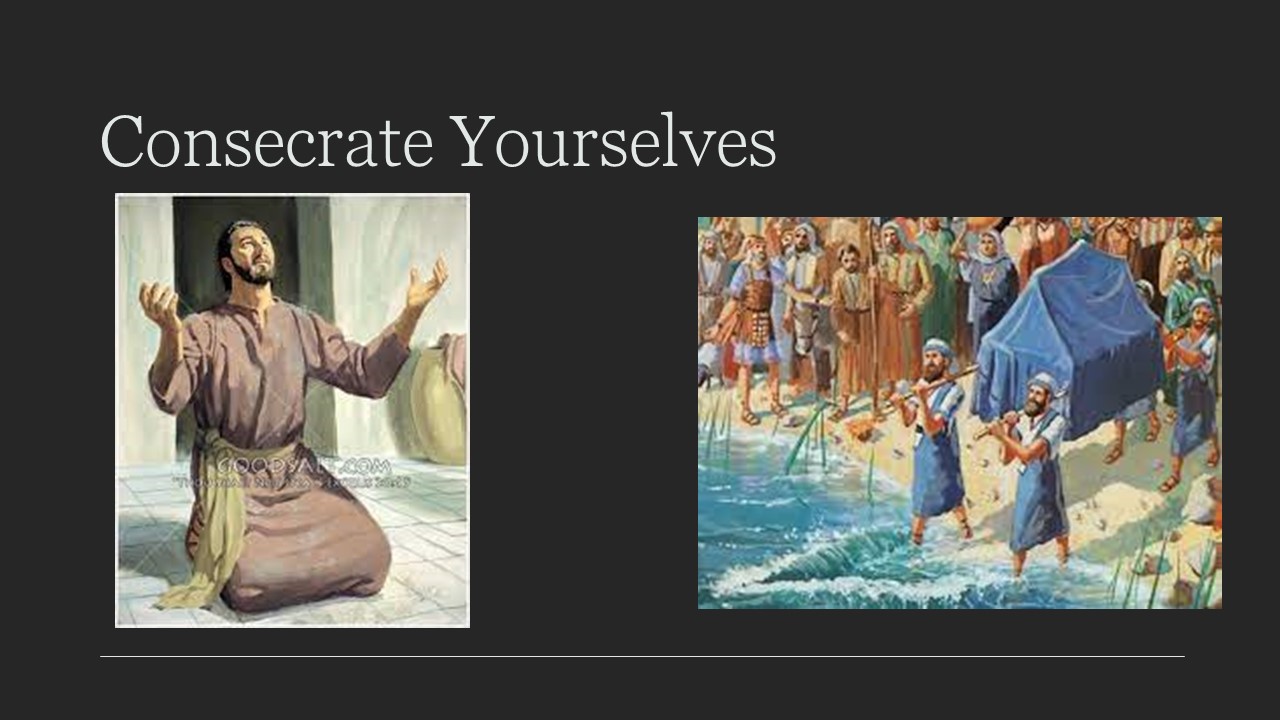
Leviticus 20:7, “Consecrate yourselves, therefore, and be holy, for I am the Lord your God.” In the Bible the word consecration means “the separation...