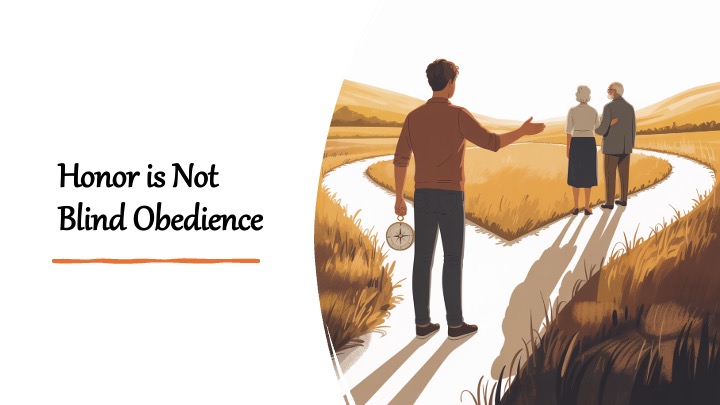
The Fifth Commandment is frequently distorted to justify blind obedience or the endurance of abuse, but biblical honor is a posture of the heart rather than a mandate for passivity. Scripture distinguishes between the life stages of childhood and adulthood; while children are called to obey for their own safety and formation, adults are called to honor. Paul’s distinction in Ephesians 6 clarifies that obedience is a temporary phase of dependency, whereas honor is a lifelong commitment to treat parents with dignity. Crucially, even childhood obedience is qualified by the phrase "in the Lord," meaning that no human authority—including a parent—has the right to command a child to violate God’s character or law.
Honoring a parent who has caused deep harm does not require enabling their behavior or suppressing the truth of the pain. The Bible provides clear warnings against associating with "fools" or those "given to anger," principles that apply even to family dynamics. True honor in these difficult contexts involves setting firm boundaries while refusing to let pain calcify into contempt. It is the courageous capacity to hold two truths simultaneously: acknowledging a parent’s flaws and the harm they caused, while still recognizing their basic humanity and refusing to dehumanize them through weaponized resentment or disdain.
Ultimately, honor is a refusal to reduce a person to a caricature, even when "dignified distance" is required for safety. It manifests as a commitment to speak truth respectfully and to grieve what was not received without spending a lifetime trying to "hurt back." By rejecting the extremes of blind idolization and total dismissal, we follow the model of Jesus, who loved without enabling and honored without compromising the truth. This mature form of honor protects the individual’s flourishing and breaks the cycle of generational dysfunction, fulfilling the spirit of the commandment through integrity rather than submission.

In the Parable of the Hidden Treasure, Jesus describes the kingdom of heaven as a treasure that a man unexpectedly finds in a field....

Noah and his family remained in the ark for over a year, enduring a season of waiting and uncertainty before stepping into a new...
In the last two chapters of 2 Samuel and the first two chapters of 1 Kings, there are themes of leadership, faithfulness to God,...