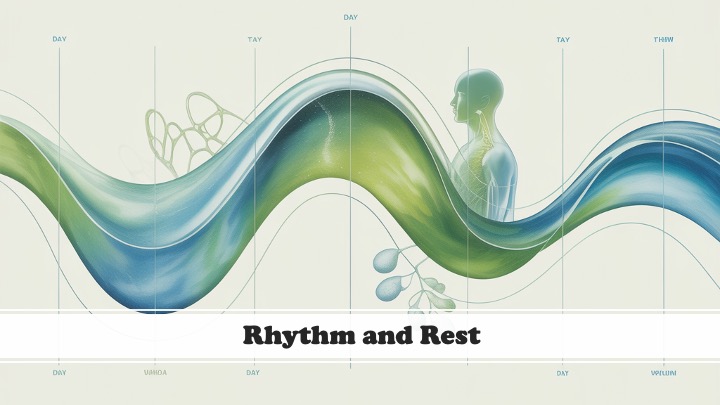
Science is increasingly uncovering a biological reality that Scripture established at the dawn of time: the "circaseptan rhythm." While we easily understand daily or monthly cycles based on the sun and moon, there is no external celestial event to explain the seven-day week. Yet, chronobiologists have discovered that a weekly internal clock is encoded into the DNA of nearly all living things, from bacteria and algae to human beings. This rhythm regulates our immune systems, hormone levels, and even blood pH. It suggests that the seven-day cycle is not merely a cultural invention of the ancient Hebrews, but a fundamental "calling card" from the Creator, imprinted into the very mechanics of life.
The fourth commandment—the call to Sabbath rest—is therefore an invitation to align our lives with our own biological and spiritual design. When God rested on the seventh day and made it holy, He established a frequency for creation that necessitates a pause for homeostasis. Modern research confirms that when we ignore this rhythm through constant work and monetization, our bodies and minds begin to desynchronize, leading to immune failure, hormonal imbalance, and emotional exhaustion. The Sabbath is God’s way of revealing that flourishing is impossible without a rhythmic cessation from productivity; it is a law given to protect the nature He already built.
Ultimately, the Sabbath rhythm serves as a vital counter-narrative to a world that views rest as a luxury or a sign of laziness. By choosing to work for six days and pause for one, we create a sacred space to remember our identity beyond our output. This alignment is not a burden of religious willpower, but a path to liberation and integration. Honoring the Sabbath allows us to synchronize our internal clocks with the original rhythm of creation, proving that true abundance is found not in endless labor, but in the harmony of a life that respects its Creator's timing.
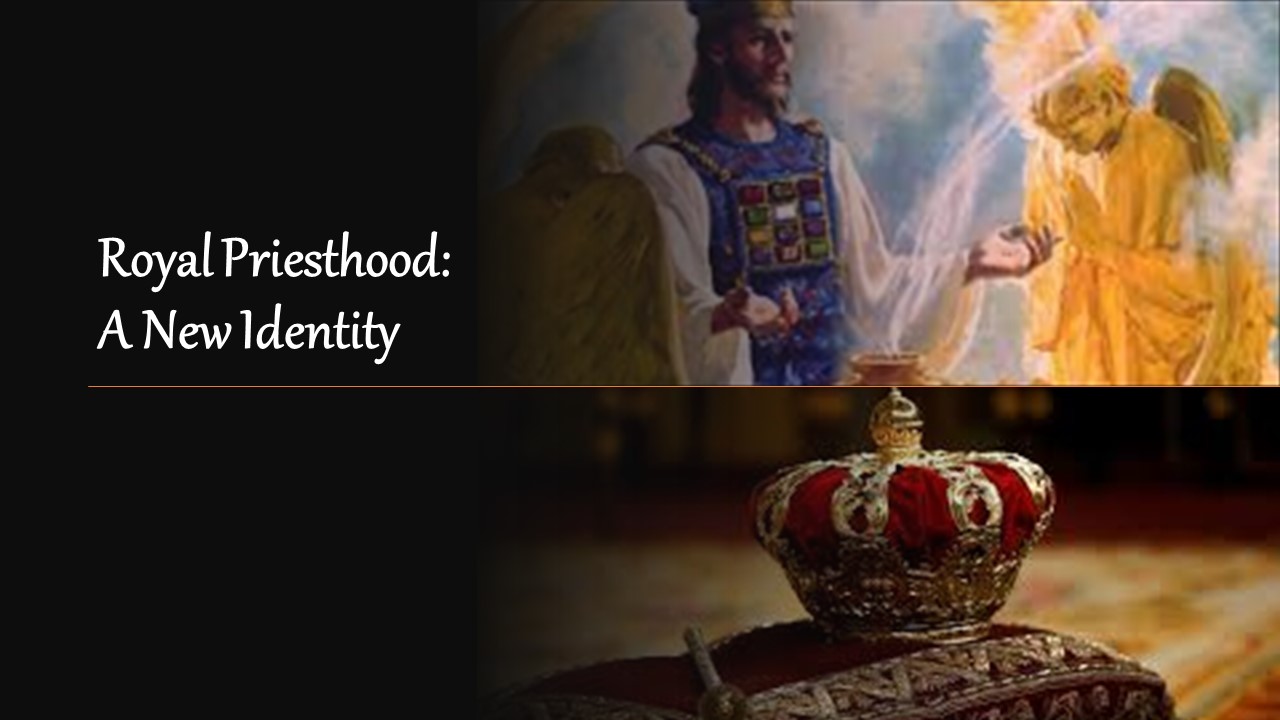
In today’s episode we discuss the significance of Revelation 1:5-6 in understanding the identity and purpose of believers in light of the resurrection of...
In Part 2 of our study of how David could be a man after God’s own heart, we explore his prayer life, faithfulness, love...

Today’s episode features a monologue. Narrated from the perspective of the angel Gabriel, it reflects on the significant events of human history and the...