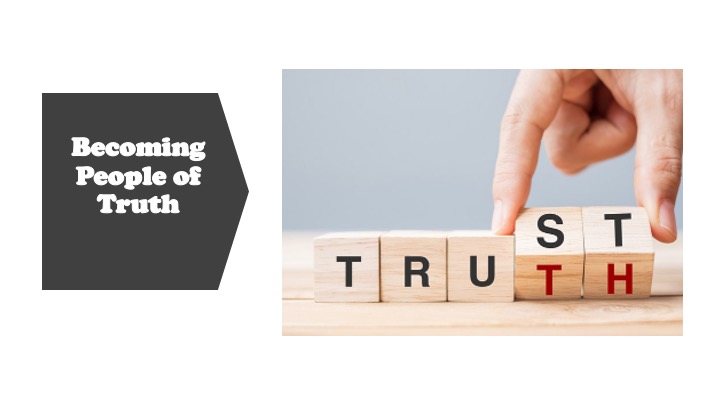
Living out the Ninth Commandment is an active discipline that requires moving beyond an abstract understanding of truth to building concrete, daily habits of honesty. As the apostle Paul exhorts in Ephesians 4, practicing truthfulness involves a conscious effort to "put off falsehood". This transformation begins in small, everyday moments, such as answering a coworker's greeting with genuine vulnerability when struggling, directly acknowledging a workplace mistake, or declining a social invitation honestly rather than inventing an excuse. These micro-moments of integrity act as the foundational work through which personal trustworthiness and communal reliability are constructed.
However, biblical truthfulness must always be balanced with maturity by "speaking the truth in love". Honesty devoid of care can weaponize words and cause unnecessary harm; conversely, staying silent or offering false reassurances out of fear of discomfort fails to protect relationships. Cultivating speech that is both honest and loving means leaning into difficult conversations—such as gently confronting a friend's destructive patterns or addressing an employee's errors—while simultaneously affirming the person's value. While this level of candor requires immense courage and often carries the personal cost of navigating vulnerability, the ultimate cost of maintaining dishonesty is far higher, as it permanently erodes trust and fractures community life.
When a community collectively commits to practicing truthfulness, it unlocks the structural conditions necessary for trust, justice, and effective collaboration to flourish. If deception has broken this social fabric, repair must begin with humble acknowledgment and public confession, which Scripture promises will open the door to genuine reconciliation and healing. Living as a person of truth ultimately rewards the individual with profound internal peace, liberation from the burden of maintaining lies, and a unified life of integrity. By honoring the commandment through consistent, loving honesty, believers follow Jesus—the very personification of truth—and help construct a stable reality where human beings can depend on one another.
Malachi, the last of the twelve minor prophets in the Hebrew Bible, is a somewhat enigmatic figure about whom very little personal information is...

We wrap up our four-week series examining the four different kinds of love in the Bible. This week we focused on agape: the love...

Is there a relationship that better exemplifies understanding, forgiveness, consolation, comfort, and unconditional love than the mother-child relationship? The Bible has much to say...