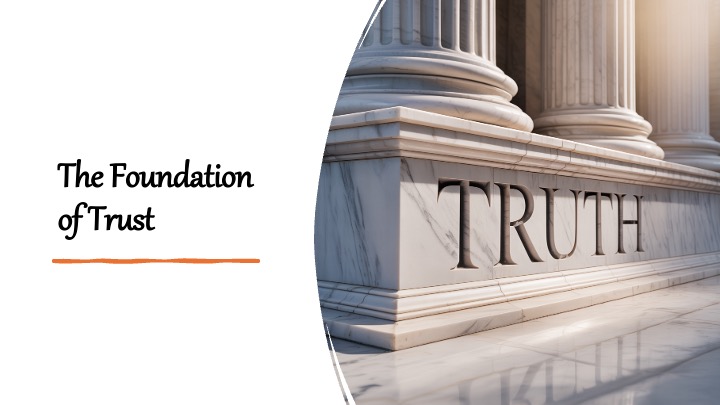
The Ninth Commandment forbids false witness because truthful communication is the indispensable foundation for all human flourishing and social stability. Without truth, essential systems such as justice, commerce, medicine, education, and government would collapse, as these institutions depend on reliable information to function safely and effectively. Speech is not merely descriptive but creative; while truthful words align individuals with reality and build trust, false speech attempts to reshape reality into a distorted version that determines harmful outcomes and fractures the bonds of community.
We currently live in an age where truth is increasingly threatened by misinformation, "fake news," and a cultural tolerance for deceptive practices like gossip, selective editing, and strategic "spin". Misinformation often spreads faster than verification on social platforms, incentivizing exaggeration and making responsible speech more difficult yet more urgent. These patterns of false witness are embedded in contemporary communication habits, leading to separate perceived realities that undermine the interdependence and respect required for people to live together peacefully.
Telling the truth is ultimately an act of love and a requirement for spiritual maturity. To speak the "truth in love" means respecting others enough to share reality with them rather than prioritizing personal comfort through deception. By putting off falsehood and speaking truthfully from the heart, individuals honor the Ninth Commandment, rebuild trust, and contribute to a world where human beings can truly thrive.

We explore three parables in Luke 15 of The Lost Sheep, the Lost Coin, and the Lost Son. This series of stories which Jesus...

In Babylonian exile, amidst broken promises and shattered dreams, Ezekiel emerges with a powerful message: the covenant, once a source of security, now demands...

The command to “Remember the Sabbath” signifies far more than a casual suggestion to rest; it is a covenant call to return to a...