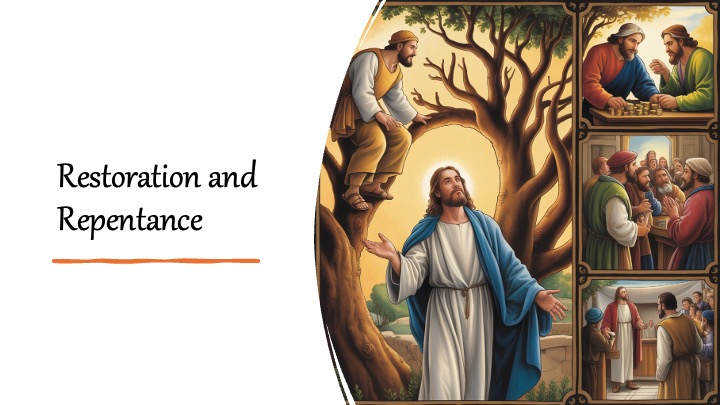
Zacchaeus’s life was defined by systematic theft, built upon a Roman tax system that allowed him to extract wealth from the vulnerable. As a "chief tax collector," his riches were not the result of honest labor but of institutional exploitation, making him a social pariah and a collaborator with an oppressive regime. However, Jesus disrupts this narrative by extending grace before demanding change. By treating Zacchaeus with dignity and choosing to stay at his home, Jesus breaks through the man’s defenses, demonstrating that the restoration of a person's humanity often precedes the restoration of their moral integrity.
Zacchaeus’s response to this grace is a model of radical, concrete repentance that goes far beyond the minimum requirements of the law. He does not offer mere private regret; he commits to giving half of his possessions to the poor and making fourfold restitution to anyone he has cheated. This proportional response acknowledges the systemic nature of his theft and the deep damage it caused to the community. His repentance is comprehensive and costly, showing that true transformation requires the active repair of the harm done and a public submission to community accountability.
Ultimately, Jesus declares that "salvation has come" to Zacchaeus, restoring him as a "son of Abraham" and bringing him back into the covenant community. This story illustrates that even a life built on institutional wrongdoing can be redeemed through the combination of divine grace and human restitution. In a modern context, this looks like moving beyond apologies to the sacrifice of one's own status or wealth to fix exploitative labor or housing practices. Zacchaeus shows that the Eighth Commandment is fulfilled not just by refraining from taking, but by the generous and public restoration of what was broken.
In Part 2 of our study of how David could be a man after God’s own heart, we explore his prayer life, faithfulness, love...

Spiritual arrogance had caused some Corinthians to have a warped understanding of freedom. They actually believed that their freedom had lifted them above the...
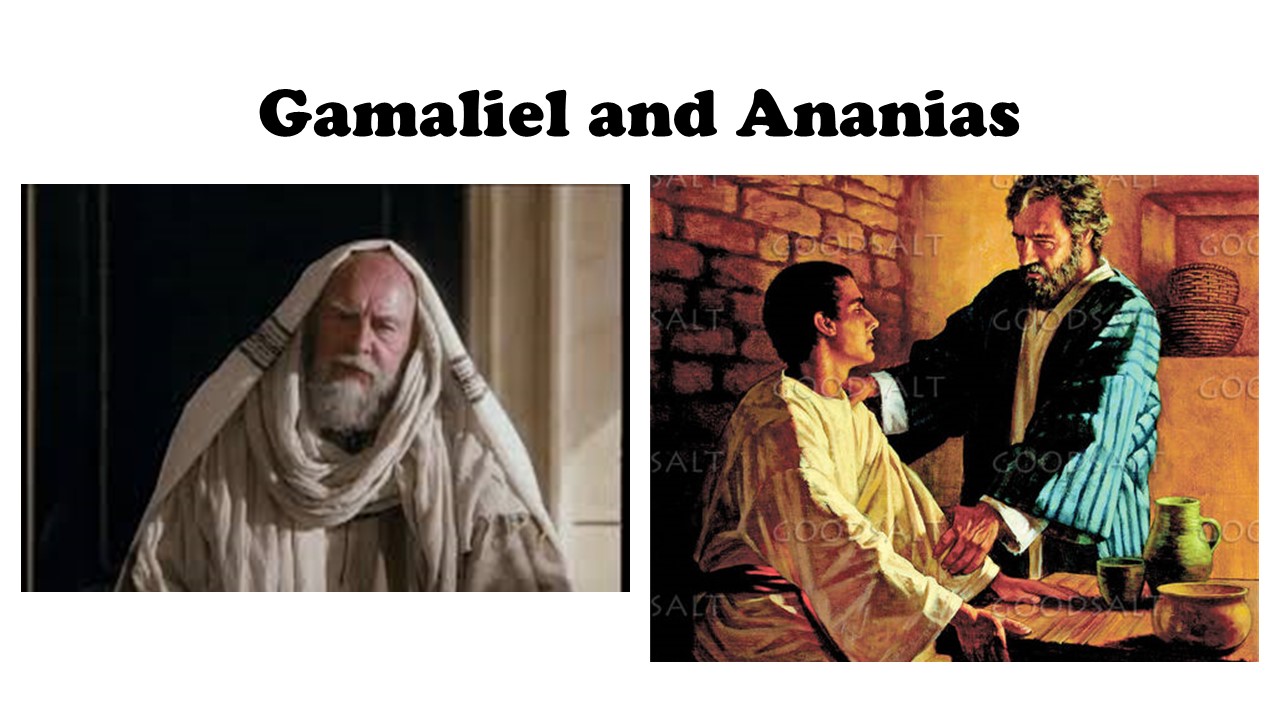
Today’s episode features two monologues based on characters in the Book of Acts. In Part 1, Gamaliel, a revered teacher of the Law and...