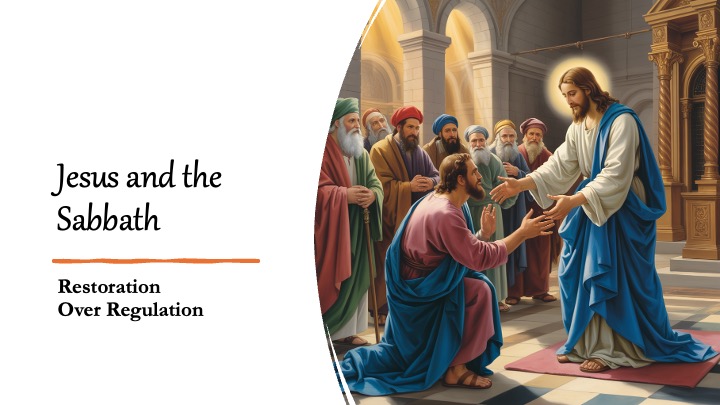
By the time of Jesus, the fourth commandment had been inverted from a life-giving gift into an oppressive legalistic trap. The religious authorities had encrusted the Sabbath with a labyrinth of "do nots," transforming a day of liberation into a day of surveillance where picking grain for hunger was labeled as "harvesting" and healing a withered hand was seen as "labor." Jesus confronted this head-on, not by abolishing the day, but by re-centering its purpose with a single, revolutionary claim: "The Sabbath was made for man, not man for the Sabbath."
Jesus’ actions demonstrated that the Sabbath is not a static rule to be policed, but a dynamic tool for restoration. To the Pharisees, the law was an end in itself; to Jesus, the law was a means to human flourishing. When He healed on the Sabbath, He wasn't violating the commandment; He was fulfilling it. He argued that a person suffering from illness or hunger cannot truly rest; therefore, acts of mercy and healing are the most "lawful" things one can do on a day meant to celebrate God as the Deliverer. In Jesus' view, the Sabbath is not a withdrawal from love, but the ultimate freedom for it.
Ultimately, Jesus invites us to shift our posture from rule-keeping to gift-receiving. Legalism always prioritizes external compliance over internal transformation, leading to a joyless performance that fails to achieve the rest God intended. If our observance of the Sabbath feels like a burden or a series of checkboxes, we have likely turned the rule into an idol. Following Jesus’ example means using the Sabbath to lift burdens, restore dignity, and help others flourish. When we prioritize compassion over precision, the Sabbath finally becomes what it was always meant to be: a sanctuary of wholeness and a weekly taste of God’s restorative grace.
In 2 Timothy 1:7, Paul reminds Timothy that God has given believers a spirit not of fear, but of power, love, and self-control. This...
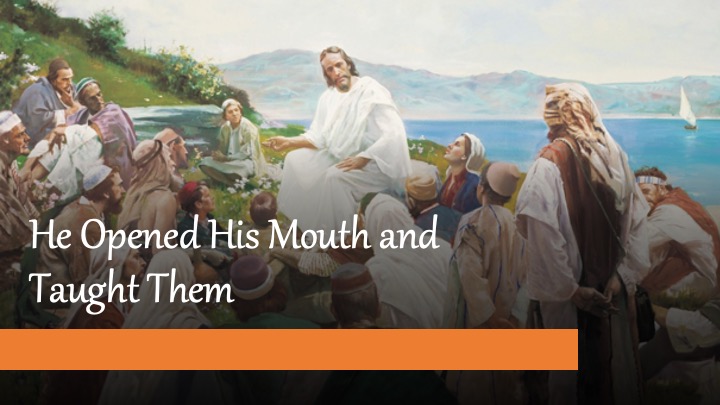
The Sermon on the Mount, recorded in the Gospel of Matthew, includes some of the most well-known teachings of Christ. Jesus didn’t come to...

The Ninth Commandment's prohibition against bearing false witness extends far beyond a formal courtroom setting, encompassing subtle and pervasive modern behaviors like gossip, spin,...