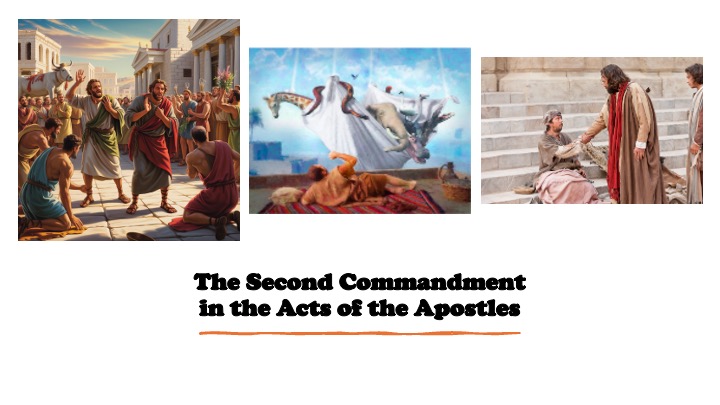
The book of Acts serves as the practical lived experience of the Second Commandment, demonstrating how a community encounters the living God without the need for physical shrines, images, or mediators. Following Jesus' ascension, the disciples find that God refuses to be localized or managed; instead, the Holy Spirit arrives at Pentecost as wind, fire, and voice—elements that are active and relational rather than static or possessable. This shift fulfills the logic of the commandment by showing that God does not provide an image of Himself but gives Himself directly and personally, ensuring His presence cannot be turned into a talisman or a commodity.
Throughout the narrative, the apostles consistently refuse to let themselves or their theology become idols. Peter and John immediately redirect the crowds' wonder away from their own "power or godliness" toward the God of Abraham, while Peter later rebukes Simon the Sorcerer for trying to purchase the Spirit as if it were a transferable technique. Even Peter’s own theological system is dismantled through a vision of unclean animals, teaching him that divine holiness cannot be trapped within a single culture's image or religious purity code. This illustrates a profound lesson: even "correct" systems become idols when they are used to limit or define what God is allowed to do.
Finally, Acts highlights the severe consequences of violating this commandment while celebrating the liberation it brings. The death of Herod, who accepted divine worship, stands as a stark warning against human representations of the divine, while Paul’s speech at the Areopagus systematically argues that the Creator of heaven and earth does not live in man-made temples or silver images. By shifting worship from the Temple to the "table"—centering on homes and local communities—the early church discovered that God is not diminished by the absence of a physical form. Instead, the Second Commandment frees believers from dependence on mediators and opens them to a direct, unmanageable encounter with the God who transcends all human imagination.
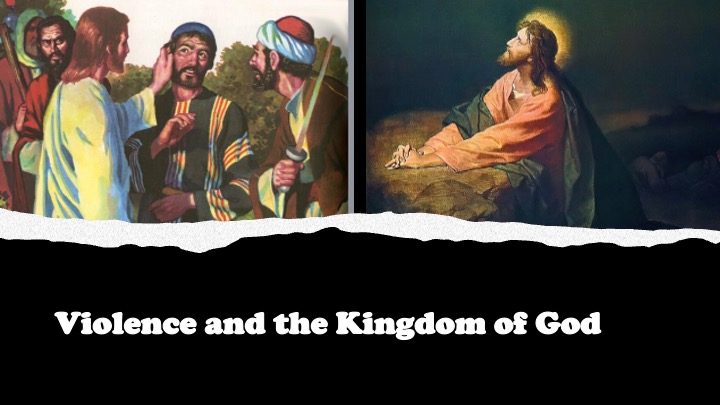
In the Garden of Gethsemane, Jesus fundamentally redefines the nature of power by rebuking Peter’s attempt to defend him with a sword, declaring that...
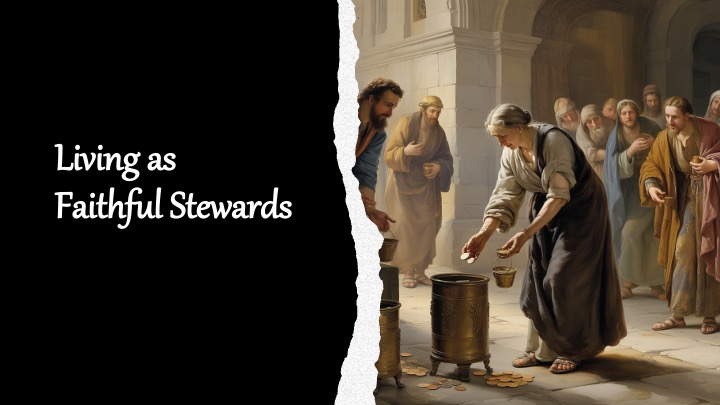
The Eighth Commandment's ultimate fulfillment is found not merely in the absence of theft, but in the presence of radical generosity. While theft is...
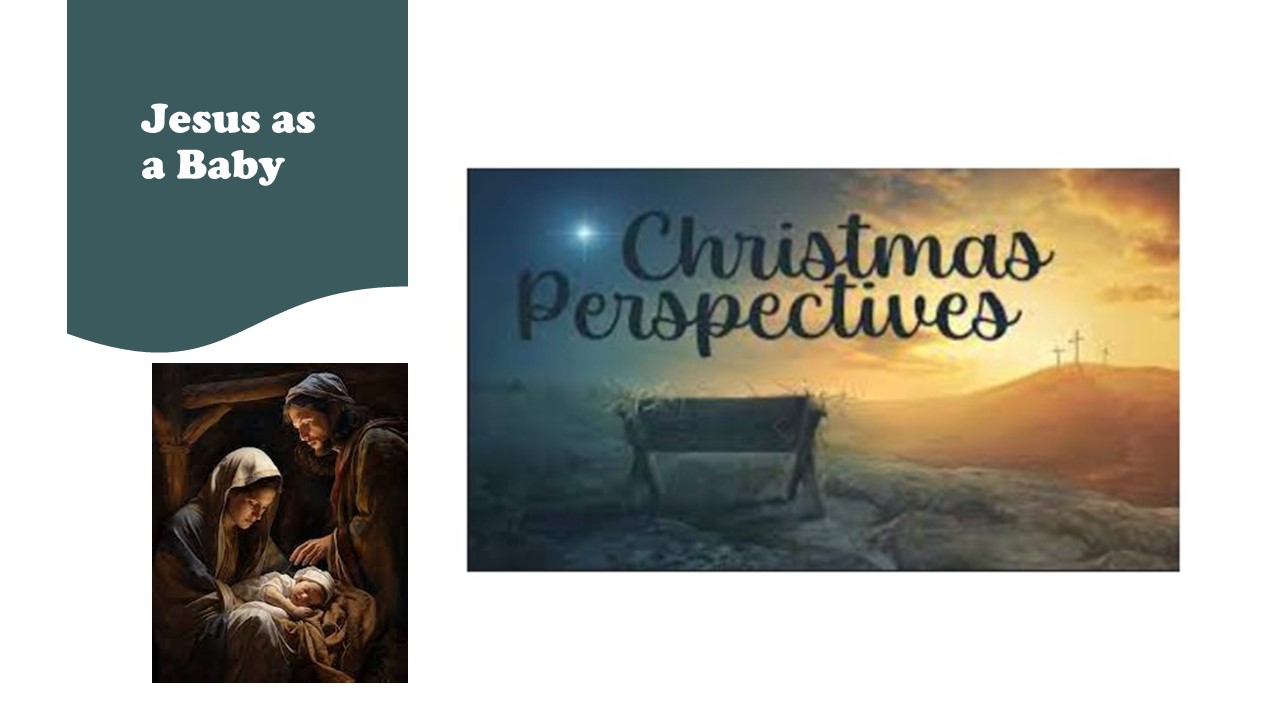
In today’s episode, in the continuing story of Maisie and her grandfather, the older man is delivering the message at the church service. He...