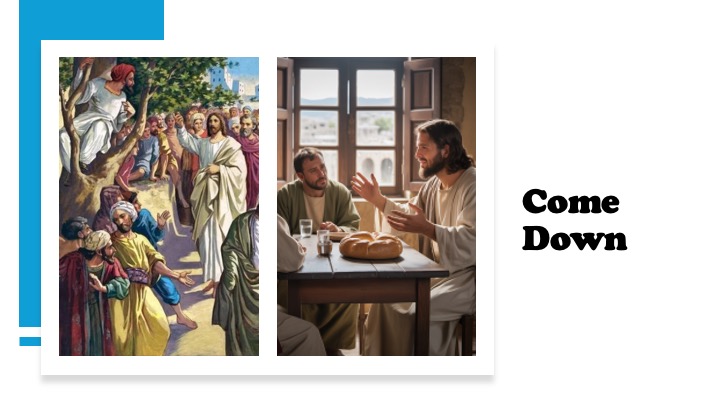
In Luke 19:1–10, we witness the dramatic encounter between Jesus and Zacchaeus, the despised chief tax collector of Jericho. Though wealthy and powerful, Zacchaeus was spiritually restless and desperate to see Jesus, climbing a sycamore tree just to catch a glimpse. But Jesus stops, calls him by name, and invites Himself to Zacchaeus’s home—an act that scandalizes the crowd but changes Zacchaeus’s life. His response is immediate: he descends the tree and receives Jesus joyfully, pledging to give generously and repay those he has wronged, showing the fruit of true repentance.
Jesus’ command to Zacchaeus to “come down” carries layered meaning. It’s a summons to humility, a break from social posturing, and a call to relationship over curiosity. Zacchaeus moves from distance to intimacy, from observation to transformation. Jesus meets him where he is—physically elevated, socially isolated—and brings him to a place of grace and belonging. His declaration, “Today salvation has come to this house,” restores Zacchaeus not only to God but also to the community, affirming him as a “son of Abraham.”
This story reveals key truths about Jesus: He knows us by name and seeks us with intentional love. He breaks cultural and religious expectations to extend grace. He honors repentance and restores identity. Through His encounter with Zacchaeus, we’re reminded that no one is too far gone for the transforming reach of Christ. When Jesus calls us to “come down,” it’s an invitation to surrender, to relationship, and to the abundant life only He can give.
Today is Part 4 of “It’s a Light Thing,” a five-part series based on a story found in 2 Kings 3:1-25. The story is...

Today is Part 2 of our 2020 Christmas Special. Scriptures referenced include Matthew 2:1-12. Visit our website: http://www.1010thrive.org/ for more resources. Artists featured include...
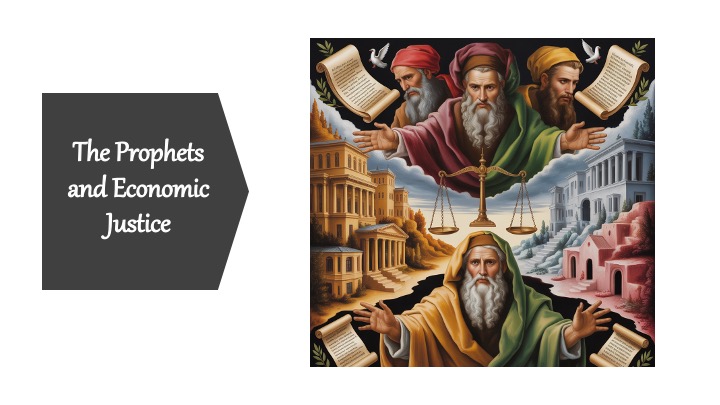
The prophets of Israel, including Amos and Micah, deliver a fierce condemnation of the Eighth Commandment that extends far beyond individual shoplifting to the...